
Editorial By Ryan Elliott P.Eng www.gdvallee.ca
The quiet small town of Waterford, nestled in Norfolk County near the shore of Lake Erie, was once a bustling railroad hub. The busy up-and-coming town had a lively downtown in the 19th century: industry, agriculture, and a well developed social fabric of schools and churches. The daily din of steam locomotives and whistles was just an unnoticeable part of the background of sounds, so very common in a small railroad town of that era. It was even the setting of what was once a famous railroad murder in 1879 – Michael Donnelly, a member of infamous Black Donnelly’s, was an employee of the Canadian Southern Railroad that was killed in a bar fight during a stop in the town.
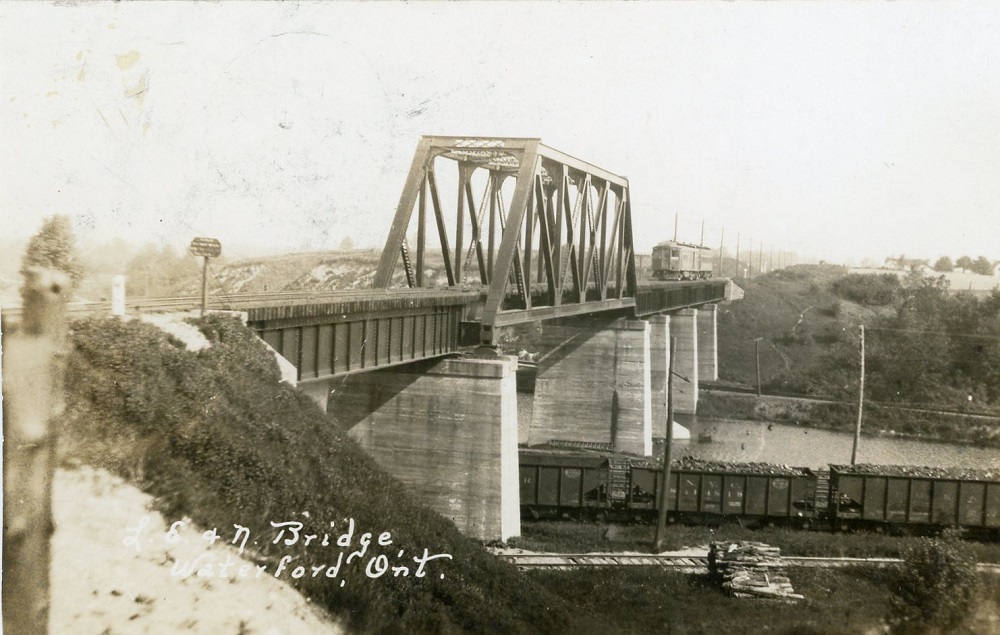
More than a century later the trains slowed down, the industry dwindled and finally the rails went quiet. No longer vibrating with the sound of industry, the town itself went quiet. The sinews of rail lines were abandoned and eventually pulled up. Their former corridors left to become overgrown derelict places; old curmudgeons would say “hangouts for ne’er-do-wells and idle teenagers to find trouble.”

This is not an uncommon story in rural southern Ontario over the latter part of the 20th century. As a kid growing up in the 80’s I distinctly remember the trains rumbling down the tracks that went right through my family’s farm. Well into the 90’s as a “ne’er-do-well” teenager, many of us were hanging around those places when the diesel engine freight trains still rumbled over and under the bridges that lace through the Waterford Ponds.
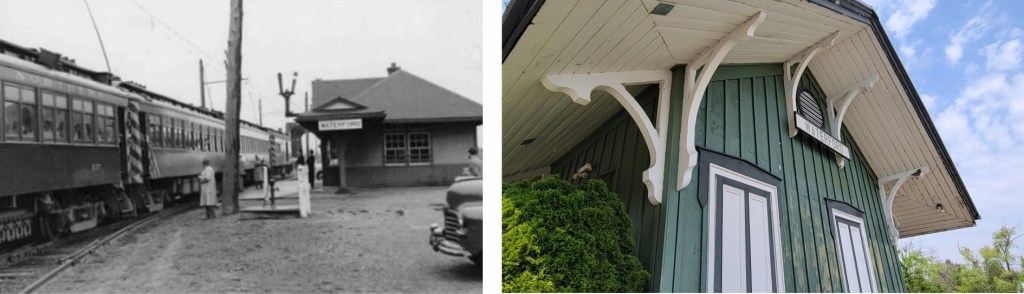
At the turn of the new millennium, the old train station which anchored one end of the small downtown, looked sadly up the street at storefronts where the merchants that hadn’t left the core were struggling to remain viable.
Then a new generation became the old-timers – but with new ideas and a dream that would spark a rejuvenation.
This small group of idealists, with community connections and needed skills went to work. They first set their sights on the remarkable Black Bridge. The structure was built in 1916 using a combination of tall concrete piers and steel girders and the marquee Warren through-truss. The pedestrian rehabilitation included new decking and a shiny new barrier rail. Once the people in town saw the end result, a new rumbling along the rails began to happen – but it was from feet, and bicycle tires, strollers and roller skates.

It started a wave of community support. Fueled with encouragement – the rejuvenation continued. A relocated Pony truss bridge, a rehabilitated steel box girder bridge, and a brand new pedestrian truss have since been added to the links of rail lines around what is now known as Shadow Lake.
And that quieted downtown street? Well now it hosts a lively farmer’s market, an antique market, a music shop, a fantastic bakery for sweet trail treats, and a wonderful craft brewery to enjoy on a patio overlooking that quaint old train station. All of it in the shadow of Black Bridge and the perseverance of a community that made a difference by embracing the heritage of what had become derelict and abandoned infrastructure.
I was proud to be the bridge engineer to help guide them over the years. I’d love to show you around sometime – meet me at the bakery for a Ritzy cupcake or on the Wishbone Brewery patio for a pint when you come down to Waterford to visit 😉

Click on Ryan’s Image Above to go to his Edifice Guild Page
Become A Heritage Consultant | Building Pathology

 Edifice Atelier Institute